
Google penalty recovery services
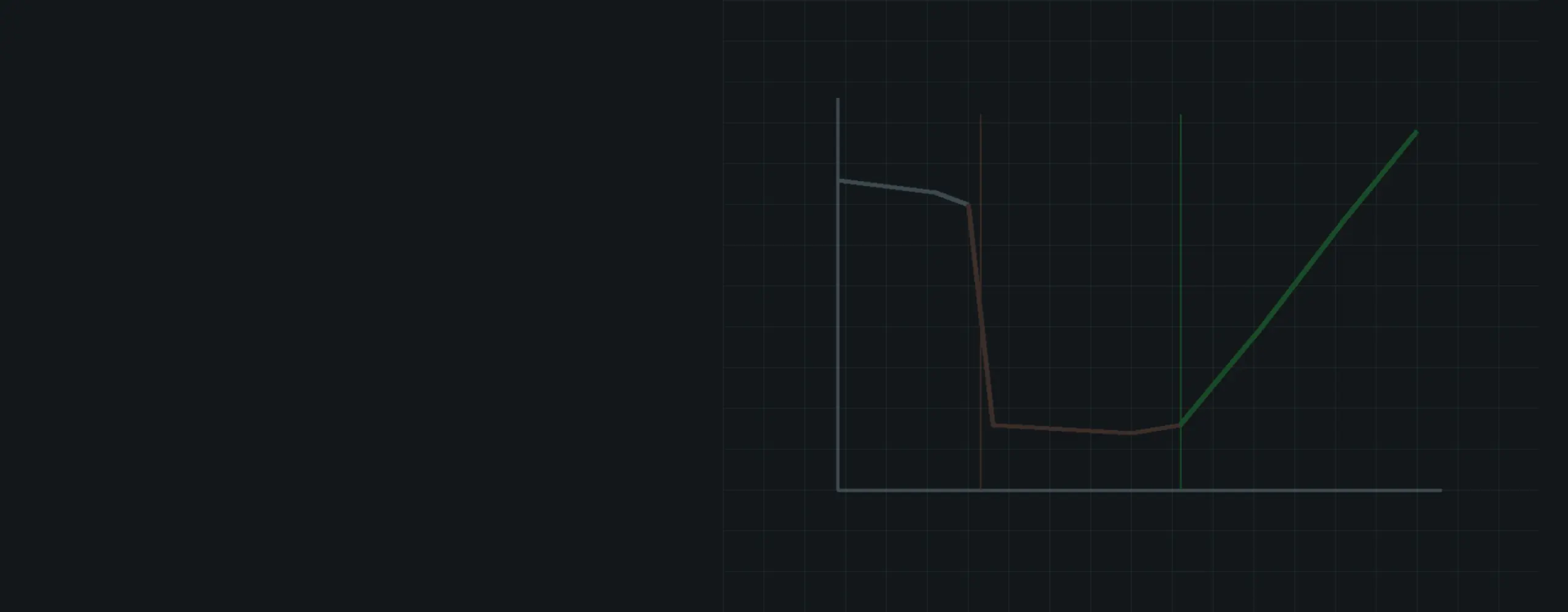
If traffic fell off a cliff on a date you can point at then something specific happened, and identifying which of the several possible somethings it was determines whether recovery takes weeks or quarters.
Held since, on a domain rebuilt from zero after the manual action.
On a new domain carrying none of the penalised site's history.
More than the channel was worth before the penalty landed.
The recovery I have actually run
One site in a high competition niche, a manual action that wiped out the term the business runs on, and the numbers above. The case study covers every decision, including the ones that were hard to make.
Read the penalty recovery case studyStep one
Which one do you have?
A manual action shows in Search Console and tells you roughly what is wrong. An algorithmic drop shows nothing at all and the site quietly stops ranking. A technical fault can look like either. Most owners cannot tell which they have, and the wrong diagnosis wastes months.
Manual action vs algorithmic penalty, in depth| Type | How you spot it | What fixes it | Typical timeline |
|---|---|---|---|
| Manual action | Listed in Search Console under Manual Actions, often with an email from Google | Clean up the cause, document it, file a reconsideration request | Weeks after a good request |
| Algorithmic drop | Nothing in Search Console; the drop lines up with a core or spam update date | Fix what the update targets, then wait for Google to reassess | Often the next update, so months |
| Technical fault | Pages falling out of the index, a stray noindex, a broken migration or redirect | Find and fix the fault, request indexing | Days to weeks |
Manual actions I work on
These are the manual actions that cost businesses the most traffic. Each needs a different cleanup and a differently written reconsideration request.
Unnatural links to your site
The most common one. Bought links, link networks or a past agency's link scheme. Fixed with a removal campaign, a documented disavow and a request that shows the work.
Thin content with little added value
Doorway pages, scraped or spun content, location pages that only swap the town name. Fixed by cutting, merging or rewriting until every page earns its place.
Site reputation abuse
Third party content published on your domain to borrow its authority. Fixed by removing or noindexing that section and showing Google it is gone.
Pure spam
Usually inherited on an expired domain or caused by a hack. Sometimes recoverable, sometimes the answer is a clean domain, and I will tell you which.
User generated spam
Spam in comments, forums or profiles. Fixed with cleanup plus moderation and nofollow settings so it does not come back.
Structured data issues
Markup that describes content not on the page, often fake review stars. Costs you rich results rather than rankings, and is quick to fix properly.
Algorithmic drops
No message, no reviewer, just a line on the traffic graph that falls on the same day as a Google update. Core updates reassess quality across the whole site. Spam updates neutralise links and tactics Google has decided to stop counting, which is why a site can lose rankings without anything changing on it.
There is no request to file. Recovery means fixing what the update targeted and earning the rankings back, which usually shows at the next update rather than the next week. I track every confirmed update, like the September 2026 spam update, so the drop date can be matched to a cause on day one.
Recover or restart?
Cleaning a domain is the default, but it is not always the right call. When the link history is too deep to remove, or the penalty has sat unresolved for years, moving the business to a clean domain can be cheaper and faster than fighting for the old one.
That is the decision I made on my own case. The new domain carried none of the penalised history, reached position one for the core term in six months, and now brings in close to 200 leads a month. You get a straight recommendation on which route fits your site, with the reasoning written down.
What you get
Named deliverables, not a promise to optimise something. Every one of these appears in the proposal with hours against it.
Get a scope for your site- A diagnosis: manual action, algorithmic, technical, or something done to the site internally
- The drop date matched against every confirmed Google update, so the cause is evidenced rather than guessed
- The link profile audited placement by placement, with a disavow file where one is needed
- A removal campaign with every outreach attempt logged, because Google asks to see the effort
- A reconsideration request written and submitted, then resubmitted if it is rejected
- A recover or restart recommendation, and the migration run properly if restarting wins
- A rebuild plan for afterwards, because lifting a penalty only gets you back to zero
- Rankings, traffic and leads reported monthly from the day work starts
How it runs
Diagnose
The drop date matched against known updates, Search Console checked, and the technical causes that look like penalties ruled out.
Clean
Remove or disavow what caused it, which for link penalties is the slow part and cannot be rushed.
Submit
A reconsideration request stating plainly what was wrong and what was done, since vague requests get rejected.
Rebuild
Once the penalty lifts you are at zero rather than back where you were, and the ranking work starts there.
Cost
Quoted after the diagnosis
A thin content action on a forty page site and an unnatural links action across thousands of linking domains are different jobs, so a fixed price before anyone has looked would be a guess. The diagnosis comes first, it tells you what you are dealing with, and the quote follows from it.
Why one consultant, not an agency
Penalty work is judgement: which links to keep, what to say in the request, whether to restart. You get the person who has been through it on a site whose revenue depended on one term, not a junior working through a checklist.
If the cause is something a previous agency did, you hear that plainly, with the evidence.
How do I know if I have a manual action?
Open Search Console and go to Security and Manual Actions, then Manual Actions. If a reviewer at Google has penalised the site, it is listed there with the reason. If that page says no issues detected and traffic still fell, you are looking at an algorithmic drop or a technical fault, not a manual action.
How long does Google penalty recovery take?
A manual action can lift within a few weeks of a good reconsideration request, though reviews sometimes take longer. Algorithmic recovery usually waits for Google to reassess the site, often at the next core or spam update, which can mean months.
How much does penalty recovery cost?
It is quoted after the diagnosis, because a thin content action on a small site and an unnatural links action on a site with thousands of linking domains are different jobs. The diagnosis tells you which you have before you commit to anything.
Will a disavow file fix a link penalty on its own?
Rarely. For a manual action Google wants to see that you tried to get bad links removed, documented that effort, and disavowed what you could not remove. A disavow file uploaded with no explanation is one of the most common reasons reconsideration requests get rejected.
Can every penalty be recovered from?
No. Some sites carry so much history that a fresh domain is the cheaper and faster route, which is what I did in my own case study. If yours is one of them I will say so early rather than bill months of cleanup.
Will you tell me what actually caused it?
Yes, including when the cause was something you or a previous agency did deliberately, because it cannot be fixed without being named.
Read before you call anyone
All guidesGoogle penalty case study: from manual action to position one
How a manual action was handled on a site in a high competition niche, from the restart decision to 200 leads a month.
Read itManual action vs algorithmic penalty
How to tell which one you have in ten minutes, and why the fixes are completely different.
Read itGoogle September 2026 spam update
What the update targeted, who lost rankings, and what to check if your drop lines up with it.
Read itOften bought with this
All servicesDigital PR and link building
Clean, earned links to replace the ones that caused the problem and rebuild authority after it.
Read moreSEO audits
A diagnosis before anyone spends money on treatment, covering technical, content and links.
Read moreTechnical SEO
Rules out the indexing and migration faults that look like penalties but are not.
Read moreHit by a penalty or a sudden drop?
Send the URL and the date traffic fell. You get a first read on the cause, not a discovery call.